
Slab Leak Repair and Detection in Clarksburg, MDLeak located, floor protected.
A slab leak is a water line failure under your concrete floor. We locate it, give you an upfront quote, and repair it without tearing out rooms we do not have to touch. Most homeowners assume a slab leak means a jackhammered living room. Usually it does not.
Pinpointed, not GuessedLicensed & InsuredAvailable 24/7
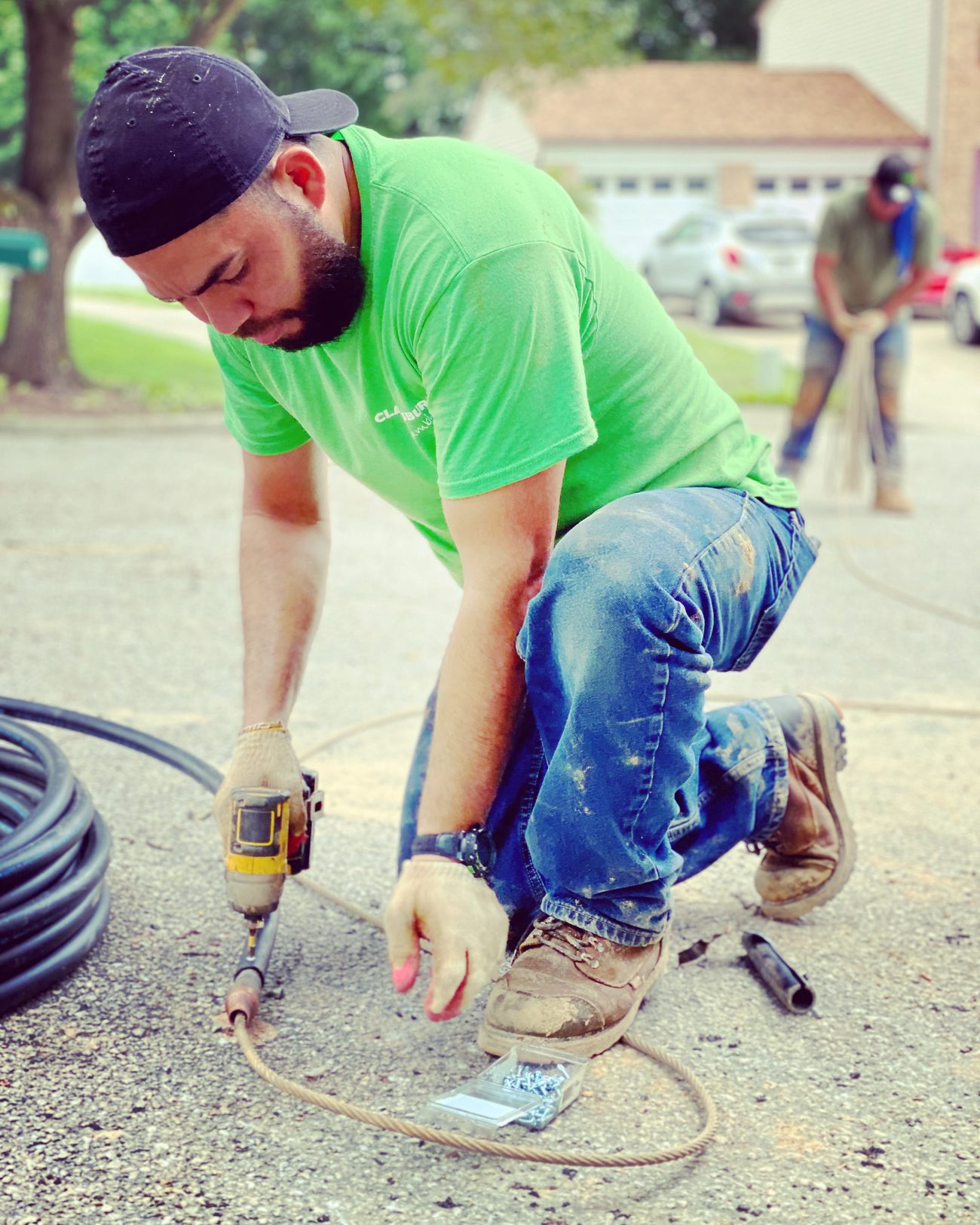
What a slab leak is, and whether your home has one
A slab leak is a leak in a pressurized water line that runs beneath a concrete floor slab. The pipe is usually copper, galvanized steel, or polybutylene. The leak is usually small at first, and it hides because concrete holds water out of sight.
Most Maryland homes have basements, so homeowners here often decide slab leaks are a Texas or Florida problem. That is not right. Water lines run under concrete in plenty of Montgomery County homes.
You can have a slab leak if any of the following describes your house:
A slab-on-grade home with no basement, common in newer Clarksburg and Germantown developments
A basement home where supply lines were run under the basement floor slab rather than overhead
A slab-on-grade addition, sunroom, or family room poured off a house that otherwise has a basement
A garage or utility room slab with a water line crossing under it
A townhome or condo where the lowest level sits on poured concrete
A leak outside your foundation footprint is a service line problem, not a slab leak. That is the yard run between the meter and the house. We cover that on our water line repair and replacement page. Our crew tells the two apart before anyone picks up a tool.
One more distinction saves people money. A slab leak is a pressurized supply line, so it shows up as a spinning meter and a rising bill. A drain or sewer line under the same slab fails differently, with backups, gurgling, and slow fixtures. Those get a sewer camera inspection first, then sewer line repair or replacement if the line is compromised.
Signs of a slab leak in a Montgomery County home
The early signs are quiet and easy to explain away. The later ones are expensive.
Catch it early
- Your water bill jumped with no change in how you use water
- You hear running water when every fixture in the house is off
- Water pressure dropped across the whole home, not at one faucet
- The dial on your water meter keeps creeping with everything shut off
Catch it late
- A warm or hot spot on the floor, pointing to a hot water line under the slab
- Damp carpet, buckled flooring, or a dark line along the baseboard
- A musty smell, mildew, or mold along an interior wall
- New cracks in the floor slab or in the foundation
- Standing moisture in a finished basement with no roof or window source
The five-minute meter test
Turn off every fixture and appliance that uses water. Find your water meter and note the reading or the position of the low-flow dial. Wait 30 minutes without using water. Read it again. Movement means water is escaping somewhere in your system. That test tells you a leak exists, not where it is. Finding where is our job.
Copper pinhole leaks and WSSC water
In Montgomery County, most slab leaks we open up are copper pinhole leaks. Copper corrodes from the inside, a pinhole opens, and pressure does the rest.
This is a documented regional problem, not a theory. WSSC Water has investigated copper pipe pinhole leaks since 1999, and began adding orthophosphate, a corrosion inhibitor, in late 2003. WSSC also states plainly that it is not responsible for home and commercial plumbing systems. The pipe inside your foundation is yours.
Copper installed before that treatment change has had decades of exposure. We see it most in homes built between 1970 and 2000, across Gaithersburg, Rockville, and Germantown. Corrosion is not the only cause. We also find:
- Soil movement and settling that puts a bend or stress point on a rigid line
- Hot water lines abrading against concrete or rebar as they expand and contract
- High static pressure accelerating wear on aging copper
- Installation shortcuts, including unprotected pipe laid directly against the slab
The cause matters because it changes the repair. One pinhole from an isolated stress point is a spot repair. One pinhole in 40-year-old copper is usually the first of several.
Slab leak detection without tearing up your floor
Finding a slab leak is different from finding a leak you can reach. The pipe is encased in concrete, so we work by elimination before anyone touches the floor.
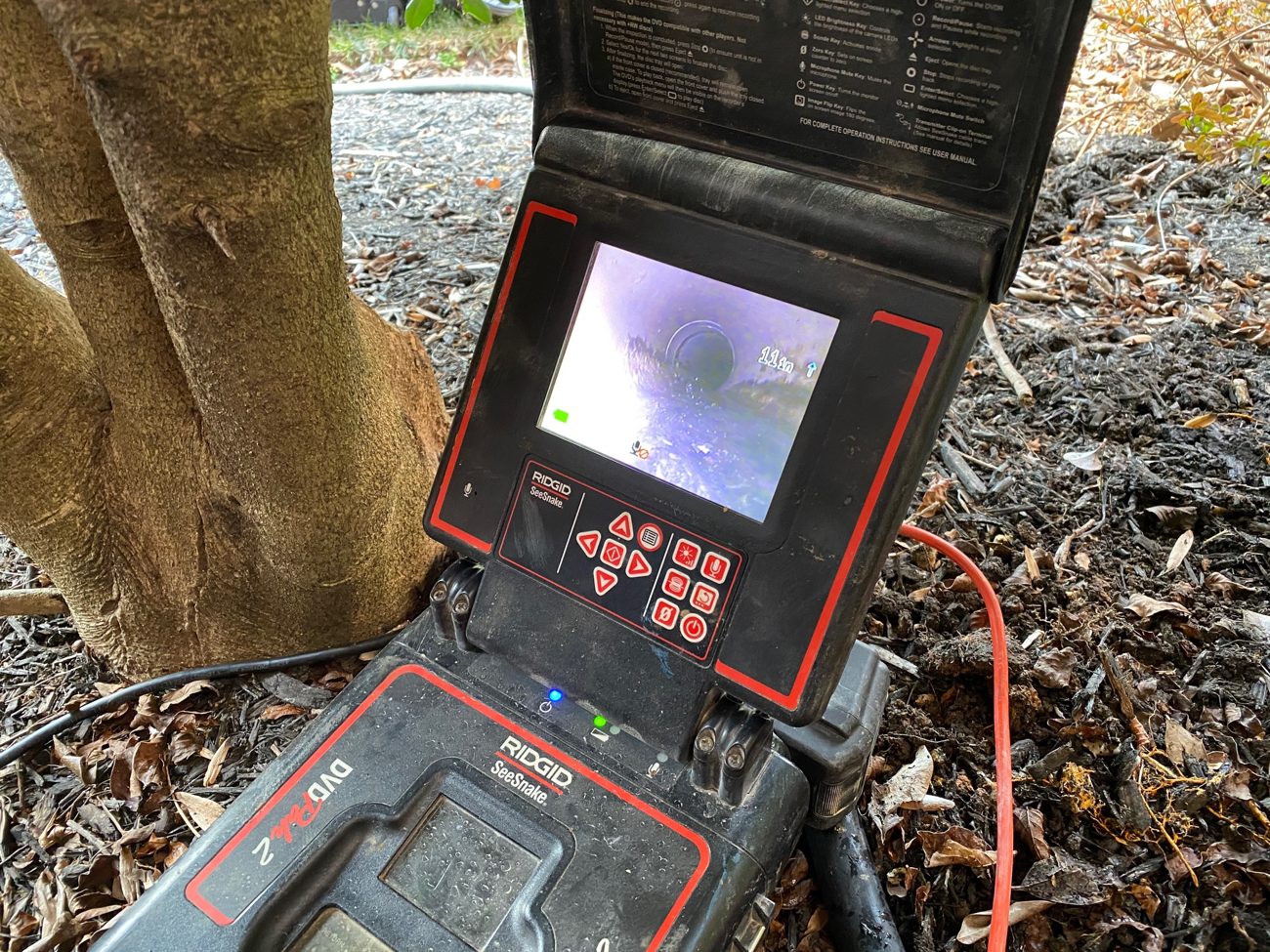
We isolate the hot and cold sides separately and watch which one loses pressure. A warm spot on the floor almost always means the hot line failed. Then we listen through the slab with sonic equipment and trace the actual pipe route, which is rarely where the plans put it. By the time we mark the floor, we are marking a spot measured in inches, not a room.
Our team owns this equipment and runs it in house. It is the same leak detection setup we bring to hidden pipe leaks, pool lines, and buried service lines.
One honest note, because it saves people money
A paid leak detection is not always necessary. We have seen enough of these to scope and quote many slab leaks without billing a full detection first. When the cost of detecting exceeds the benefit, we say so. On a long run, a commercial slab, or a shared line, guessing means digging the wrong 40 feet, and there detection pays for itself immediately.
Slab leak repair options, and how we pick yours
There are four ways to fix a slab leak. We recommend one, explain why, and leave the decision with you.
Spot Repair
We open a small section of concrete over the leak, cut out the failed piece, and splice in new pipe. Fastest and cheapest, right when the pipe is otherwise sound and it is the first failure on that line.
Reroute the Line
We abandon the pipe under the slab and run a new line overhead or through walls. Nothing gets jackhammered. Best under a finished floor, a kitchen island, or tile worth saving.
Repipe the Affected Run
One section fails and the rest of that run is the same age and condition. Replacing the whole run beats chasing pinholes. You pay once instead of three times.
Whole-Home Repiping
If pinholes show in more than one place, the copper itself is the problem. We repipe in PEX or copper, handle permits and inspections, and use bypass valves so your family stays home. A typical 3 bed / 2 bath runs about three days.
The decision rule we use is simple. One leak in newer pipe gets a spot repair. Repeat leaks in aging copper get replaced, because a fourth spot repair costs more than the repipe you were avoiding.
If the failure turns out to be in the line outside, the same repair-or-replace math applies underground. Our guide to trenchless versus traditional sewer repair walks through that decision in Montgomery County terms.
How your slab leak repair goes, step by step
A straightforward spot repair is often a same-day job. A reroute or partial repipe typically runs one to three days.
We confirm the leak and locate it
Acoustic, thermal, and pressure testing narrow it to a spot and a depth. We open only what we must.
We give you an upfront quote
Repair versus reroute versus replacement, flat pricing, before any work starts.
We protect the space
Floor coverings, containment, and dust control go in before the first cut.
We make the repair
Spot repair, reroute, or replacement, using the method you approved.
We test before we close
Pressure test the line and verify the leak is gone.
We restore the area
We patch concrete and put the space back as close to how we found it as possible. Finish flooring and drywall goes to referral partners when it falls outside plumbing scope.
Slab leak repair cost in Maryland, and what changes the price
There is no single price, so here is how the number gets built.
Leak detection, when a job genuinely needs it, runs from $650 to $2,150. The low end is a standard residential daytime detection. The high end reflects nighttime, weekend, emergency, and commercial work, like isolating a line under a parking lot or a large building.
Sometimes the leak is in your outside water or sewer service line instead. There, trenchless sewer and water line replacement can often skip the trench entirely. Underground repairs in this area run from $1,500 to more than $20,000. Depth past 10 feet, rocky ground, sidewalks, driveways, street proximity, and permit and inspection requirements all push that number up.
Every job gets an upfront quote with flat pricing before work begins. We offer financing through GreenSky when a slab leak lands as a sudden emergency.
Why homeowners choose us after another plumber missed it
We like being the second plumber on the job. Our owner puts it plainly: we find issues other plumbers cannot locate.
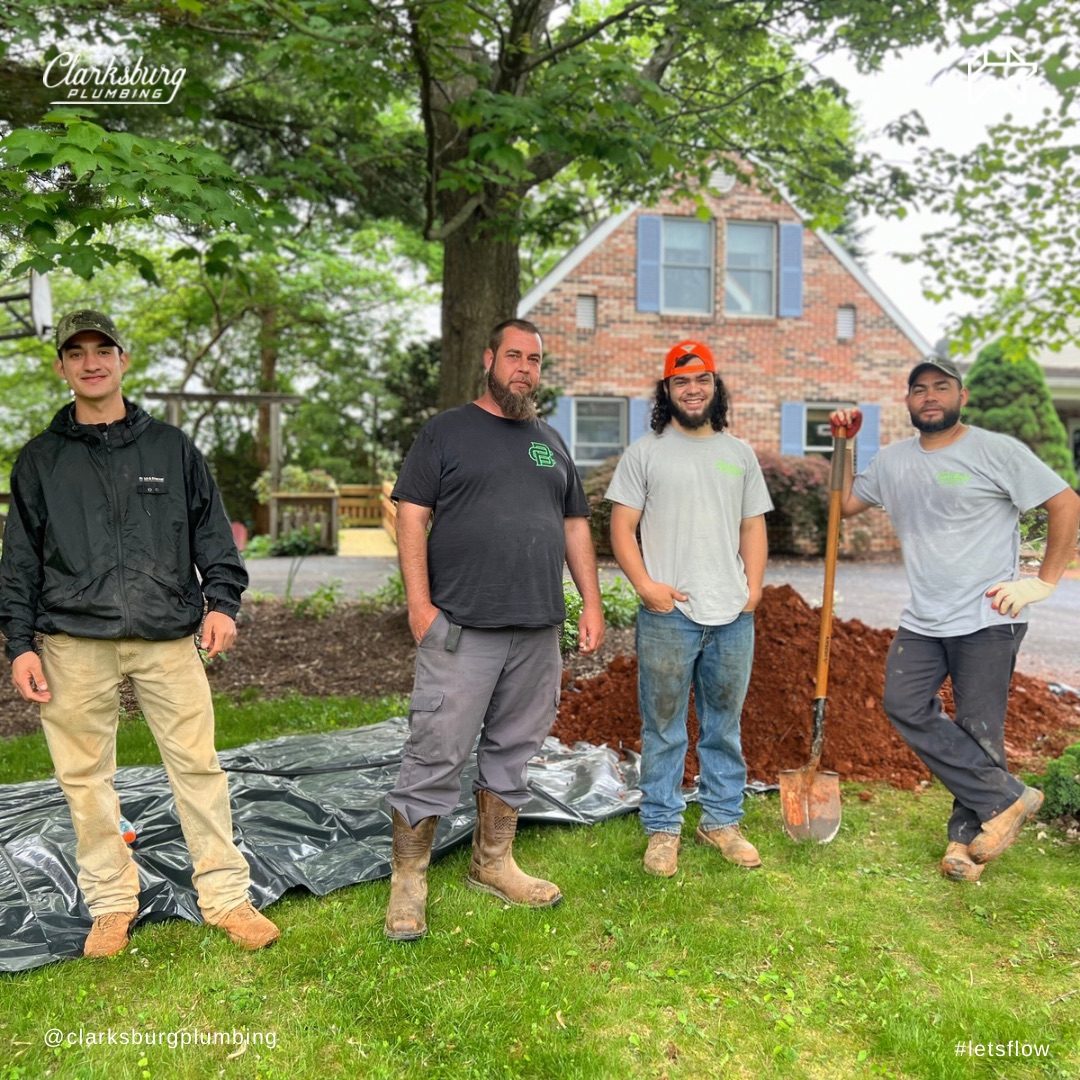
Slab leak work is one piece of our underground plumbing division, and that depth is the difference. We have three master plumbers on staff and run our own detection, camera, locating, and trenchless equipment rather than subbing it out. We pull permits before we dig, carry current Miss Utility and OSHA training, and hold WSSC WERI access for main, tap, and connection records.
Our warranties are stated, not implied: repairs carry 90 days, replacements one year, underground excavation three years, and the underground water line pipe carries a lifetime warranty that transfers with the home. When you call at 11 p.m., a member of our own office team answers, not an answering service or a bot. Family owned, women owned, fourth generation, in Montgomery County since 2008. New school plumber, old school values.
Trusted by your neighbors
 Rating

Seth was excellent; he provided great and fast service and was very helpful as the scope of the work increased. Thanks!


I had an absolutely wonderful experience with Clarksburg Plumbing LLC, and especially with Seth. From the moment he arrived, he was professional, respectful, knowledgeable, and quite frankly, a breath of fresh air. I was extremely nervous about the situation because my leak was below the main water shutoff valves, and the water had to be turned off at the street. Seth immediately put me at ease and assured me that everything was going to be okay. Rather than just putting together a temporary solution, he wanted to make sure he ordered the exact parts needed to do the job properly. Seth told me he expected to have the correct part and be able to return on Wednesday to complete the repair. On Tuesday afternoon, the office called to let me know the part had arrived and confirmed that Seth would be back Wednesday morning between 8:00 and noon. Seth was at my door at 8:10 AM! I was genuinely impressed. He completed the repair carefully, explained everything he was doing, and was extremely conscientious about properly turning the water back on, opening the faucets in the house, and making sure everything was working exactly as it should. What impressed me most, though, was Seth himself. He has a wonderfully calm, professional demeanor that made a very stressful situation so much easier for me. I sincerely appreciate the care he took with my home and the respect he showed me throughout the entire process. Clarksburg Plumbing is very fortunate to have someone like Seth representing their company. I would absolutely recommend them and Seth!!


I had a great experience with Tyler when he came out to replace our toilet flushing system. From start to finish, Tyler was incredibly courteous, professional, and knowledgeable. He walked me through what needed to be fixed, answered all my questions patiently, and completed the job efficiently. It’s rare to find such high-quality service and attention to detail. Everything is working perfectly now, and he left the work area completely clean. I highly recommend Tyler for any plumbing needs!


John and Maddy showed up on time and did a superb job. Very friendly and informative


Absolute best plumbers I have ever used. Needed them a few times recently and each time they were so professional, kind and resolved each problem the first time around. This last issue took them several hours to fix. They explained everything along the way and gave a very fair price for a lot of work. They also work very cleanly! I will never use another plumber! I wanted to add a new review but I could not so I am editing my previous one. I had to use Clarksburg Plumbing again today and like last time, they were exceptional. I was fortunate enough to have John and Madeleine as my service technicians. I will always request them going forward. They are kind, professional and knowledgeable! I am sure the company knows how fortunate they are to have them as part of their team!

We thank Clarksburg Plumbing again for superior, high quality and friendly service! ----- Clarksburg Plumbing visited us last week to repair an external spigot that had been leaking. The work involved creating a little inside access panel. Within and without, a nice, neat job by Charlie and his understudy apprentice, Chris. Problem solved and happy campers here! ----- UPDATE: Plumber John Brown presented himself on time and got right to work replacing my Mom's ancient leaky kitchen faucet with a new store-bought one that I provided. During the process, Mr. Brown detected and showed me two other problem areas contributing to the water leaks: a cracked drain pipe and then rusted threads on the sink trap. He efficiently and expertly repaired all three elements to our full satisfaction. Plus, John is a super nice guy, completely honest and classy enough to laugh at all my corny jokes! The next time you need any plumbing work in your home or business, I strongly endorse John Brown and anyone on the Clarksburg Plumbing team! UPDATE 2: John and his understudy Maddie visited, and quickly solved the problem of a pinhole leak in copper tubing leading from our hot water heater. He advised us on other plumbing needs, for which we have scheduled and will otherwise follow-up. Thank you Clarksburg Plumbing for your top quality people - John Brown in particular - and performance.

Their work was excellent. The problem solved a difficult situation with a water pipe leak and worked hard to implement it. Very grareful for the work of Franklin, Noah, Cotton, Markell, Tevon, Jason, Deybis

Tevon, Noah, Markell, and Morrow were sent by Clarksburg Plumbing LLC to repair an outside broken waterline They arrived at the appointed hour and completed the work in about 3 hours. I was very impressed with them and I would like to recommend all four of these very professional and friendly technicians. Clarksburg Plumbing is a fantastic organization; the office staff, Katie and Charlotte, who helped me are the best.

Our well lines began to leak after many years of service. Noah Zohrabi,YDeybis Gomez & Markel Watts came to the rescue! Excellent service from some very professional, courteous & knowledgeable folks!

Thank you to Seth, who came on Wednesday and fixed one of our two toilets and fixed our primary bedroom shower. And thank you to Charlie, who came today and replaced our other toilet and replaced our garbage disposal. You are both lifesavers! Our weekend (and going forward) will be MUCH nicer now that we can use our bathrooms (and garbage disposal) again. Highly recommend Clarksburg Plumbing.

Excellent service today from John Brown and Madeleine S. They were very kind and took time to explain the issue with my dishwasher. I really appreciate their professionalism and efficiency. I would definitely consider using this company again based on my service today!

GREAT service and expertise! John and Maddie just installed a water filtration system to our home. The process took one day to install and then they came back from the 48 hour install period to ensure everything was working well. John was familiar and knowledgeable about the water system we bought. Maddie and John kept our space clean, clearly explained how to ensure longevity for our system to last, and the difference it will make in our home. We appreciate their hard work and professionalism. This is our second time using Clarksburg plumbing. We would highly recommend their company to our family and friends.

We had a good experience with Clarksburg Plumbing: it was easy to schedule, they communicated clearly, arrived on time, and did a great job on completing the work.


John did Excellent job with installing water refrigerator line for my refrigerator. My Condo was built 1983, and pipes were complicated, but not for John. He found it easy and finished the job in the timely manner. I am very happy customer. Thank you John!!
Where we repair slab leaks
Clarksburg Plumbing repairs slab leaks throughout Montgomery County and Frederick County, Maryland. We work in Clarksburg, Germantown, Gaithersburg, Rockville, North Bethesda, Potomac, Damascus, Boyds, Olney, Poolesville, and the Frederick County towns nearby. See the full service area list.
Slab leak repair FAQ
What is a slab leak?
A slab leak is a leak in a water line beneath your concrete foundation or floor slab. Copper supply lines are the most common culprit in Maryland homes.
How do I know if I have a slab leak?
The clearest early signals are a water bill jump and running water you cannot place, plus whole-home pressure drops and the meter moving with everything off. Warm floor spots, damp flooring, and musty odors mean it has been leaking a while.
Can I have a slab leak if my house has a basement?
Yes. Supply lines are sometimes run under a basement floor slab, and slab-on-grade additions off basement homes are common in Montgomery County. We identify the foundation type and pipe routing before we quote the work.
How much does slab leak repair cost?
It depends on the repair method and access. Leak detection, when needed, runs $650 to $2,150. You get an upfront quote with flat pricing before we start, and we offer GreenSky financing.
Does homeowners insurance cover slab leak repair?
Sometimes, and the distinction matters. Most policies treat sudden, accidental water damage differently from long-term seepage: insurers often pay to access the pipe and for the resulting water damage, but often decline the failed pipe itself as wear and tear. Policies differ, so read yours. WSSC does not cover plumbing inside your property line, and we do not work directly with carriers, but we document the job in full and answer their questions after the work so you can seek reimbursement.
Do you have to break up my whole floor?
No. Most slab leaks are fixed with a small targeted opening or by rerouting the line entirely, with no concrete removed. We tell you which applies before work starts.
How long does slab leak repair take?
A spot repair is often same day. A reroute or partial repipe typically takes one to three days. A full home repipe on a 3 bed, 2 bath house runs about three days.
If I have one pinhole leak, will I get more?
In aging copper, usually yes. Pinholes come from corrosion across the whole system, not one unlucky spot. That is why we recommend replacing a run once it produces repeat leaks.
How long can a slab leak go undetected?
Months, and sometimes years. Concrete hides the water, and the first thing most people notice is the bill. That is why the meter test is worth running the moment you suspect anything.
Does WSSC pay for a pinhole leak in my house?
No. WSSC Water states it is not responsible for home and commercial plumbing systems. It supplies the water; you own the pipe inside your property.
Is a slab leak an emergency?
Treat it as one. Pressurized water under concrete undermines soil, wrecks flooring and framing, and feeds mold. We answer emergency plumbing calls 24 hours a day.
Do you do commercial slab leak detection?
Yes. Frozen and broken lines under parking lots, roadways, shopping centers, and apartment complexes are regular winter work for us. Detection there saves far more than it costs.
Let's Flow.Let's Flow.
You do not need to know whether it is a slab leak, a service line, or something else. Tell us what you are seeing. We will locate it, quote it upfront, and fix it with the least disruption possible. Clarksburg Plumbing LLC, 15300 Croghan Lane, Clarksburg, MD 20871. Available 24/7.
Let's get started
(301) 972 2223
Available 24/7 for Clarksburg and beyond